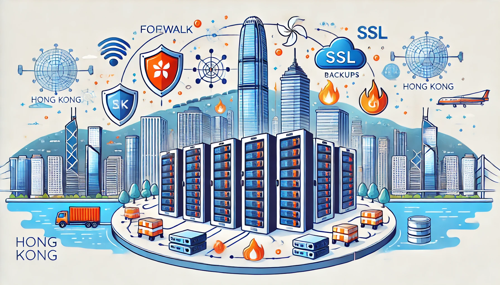
Introduction: This article is aimed at technicians and operation and maintenance engineers who need to deploy cloud hosts in the Korean market. It systematically introduces the practical process and key precautions for building Korean cloud servers, covering selection, network, security, deployment and online testing, etc., to facilitate SEO and localization optimization.
Why choose Korean cloud server
Selecting a Korean cloud server is usually based on the access speed, compliance and localization service needs of target users in or around South Korea. Deployment in South Korea can significantly reduce latency, improve access stability, and help obtain local CDN and network operation support to achieve better user experience and search visibility.
Preparation and needs assessment before selection
Before starting to set up Korea Cloud Server, you should evaluate traffic estimates, concurrent requests, data storage needs and compliance requirements. Clarifying business peak periods, backup strategies, and capacity expansion plans will help determine instance specifications, bandwidth, and geographical location during subsequent model selection to avoid repeated migration costs.
Bandwidth, latency and geographical location considerations
Bandwidth and latency are key factors affecting server deployment in South Korea. Prioritize availability zones close to target users or exit nodes, and evaluate network backbone, international links, and CDN access solutions to ensure that page response time and stability meet business requirements.
CPU, memory and storage configuration recommendations
Choose an appropriate CPU to memory ratio based on the type of business, such as CPU-intensive or memory-intensive instances. Distinguish between system disks and data disks for storage, use SSD or high-performance network storage, and plan IOPS, snapshots, and hot and cold data tiering to achieve a balance between cost and performance.
Operating system and image selection
The choice of operating system should take into account compatibility and frequency of security updates. Common ones include Linux distributions and Windows Server. It is recommended to use official or trusted images and configure automatic patches, minimal installation and necessary security modules to avoid additional service exposure.
Network, Security and Compliance Configuration
In the process of building a Korean cloud server, network and security configuration cannot be ignored. Configure firewalls, security groups, intrusion detection and minimum port exposure policies, and set up VPN or dedicated line access. Follow local data protection requirements and plan log retention and auditing strategies appropriately.
Environment building: from basic components to middleware
In accordance with the principle of gradually building from the operating system, dependent libraries to middleware, system optimization and basic security settings are first completed, and then the database, cache, application operating environment and reverse proxy are deployed. Use automated scripts or configuration management tools to improve deployment consistency.
Pre-launch testing and performance optimization
Before going online, stress testing, concurrency testing and fault recovery drills should be conducted to verify load balancing, automatic scaling and health check configurations. Adjust the connection pool, cache strategy and database index based on the stress test results to ensure that business SLA requirements are met.
Post-deployment monitoring, backup and operation and maintenance
After the Korean cloud server is built, it is necessary to establish a real-time monitoring, alarm and log aggregation system to monitor CPU, memory, disk and network indicators. Configure regular backup and off-site disaster recovery strategies, and formulate operation and maintenance manuals and drill plans to reduce operational risks.
Troubleshooting and common problem handling
Common faults include network jitters, disk IO bottlenecks, database lock tables, etc. When troubleshooting, first confirm monitoring alarms, logs, and network links, and then locate the source of the problem layer by layer. Establish a fault knowledge base and traceback mechanism to improve response efficiency.
Summary and suggestions
Summary: Korean cloud server construction needs to start with demand assessment, pay attention to network, performance and compliance, and adopt automated deployment and adequate testing strategies. It is recommended to formulate a clear expansion and backup plan, and continuously optimize monitoring and localized SEO configuration to ensure stability and reliability after going online.
- Latest articles
- How To Formulate Strategies For SEO And User Experience Optimization Based On The Characteristics Of Hong Kong Cn2 And Ctg
- Hong Kong Vps Shatin Node Quick Start Guide Includes Speed Test, Connectivity And Security Settings
- Malaysia Server Cloud Computer Deployment Strategy And Enterprise Remote Collaboration Solutions
- Cambodian Server Alibaba Cloud Environment Construction And FAQ Summary For Developers
- Beginners Must Read The Advantages And Disadvantages Of Ultra-low-priced VPS In The United States And Real Speed Test Reports
- Cloud Server Vietnam Migration Guide: Steps And Risk Control From Data Synchronization To Traffic Switching
- Comparison Guide: Advantages And Disadvantages Of Japanese Native IP L2TP And Other Protocols
- Avoiding Packet Loss And Disconnection Problems In Stimulating Battlefield Optimization Of Korean And Japanese Servers
- Main Points Of Server Security Protection And DDoS Defense Deployment In Hong Kong And The United States
- What Are The Advantages And Disadvantages Of Hong Kong And Taiwan Servers In Terms Of Latency And Regulations?
- Popular tags
-

How To Choose A Suitable Korean VPS For Watching Korean Live Streams
This article provides professional advice on how to choose a suitable Korean VPS for watching Korean live streams, helping users enhance their viewing experience. -
Advantages Of Korean Local Cloud Servers And Recommended Service Providers
This article discusses the advantages of Korean local cloud servers and recommended service providers, suitable for users who have demand for cloud computing. -

How To Gain Practical Experience In Korean VPS Forums
This article discusses how to gain practical experience in the Korean VPS forum to help users better choose and use VPS services.